
Roof Flashing Repair in South River, Sayreville, NJ
In short: Roof Flashing Repair in South River, NJ 08882: rebuilt step, counter, apron and wall flashing for 1940s–60s homes along the river. Thin attic insulation makes ice dams the winter signature When you call (888) 974-0663, our call representatives are available 24/7 — describe the leak and we will route you to local help fast.
Roof Flashing Repair in South River calls for replacement of failed step, counter, apron, and wall flashing — the metal details that seal every roof-to-wall junction and that cause most leaks once they crack or corrode. South River's older neighborhoods have some of the area's oldest roofs. Original flashing details, worn valleys, and brittle shingles make for challenging but very fixable leaks. Roof Leak Repair Co brings the right diagnosis and a permanent fix to every South River home we service.
Serving the 08882 ZIP code and every Sayreville neighborhood, we know exactly how roof flashing repair behaves on South River-area roofs.
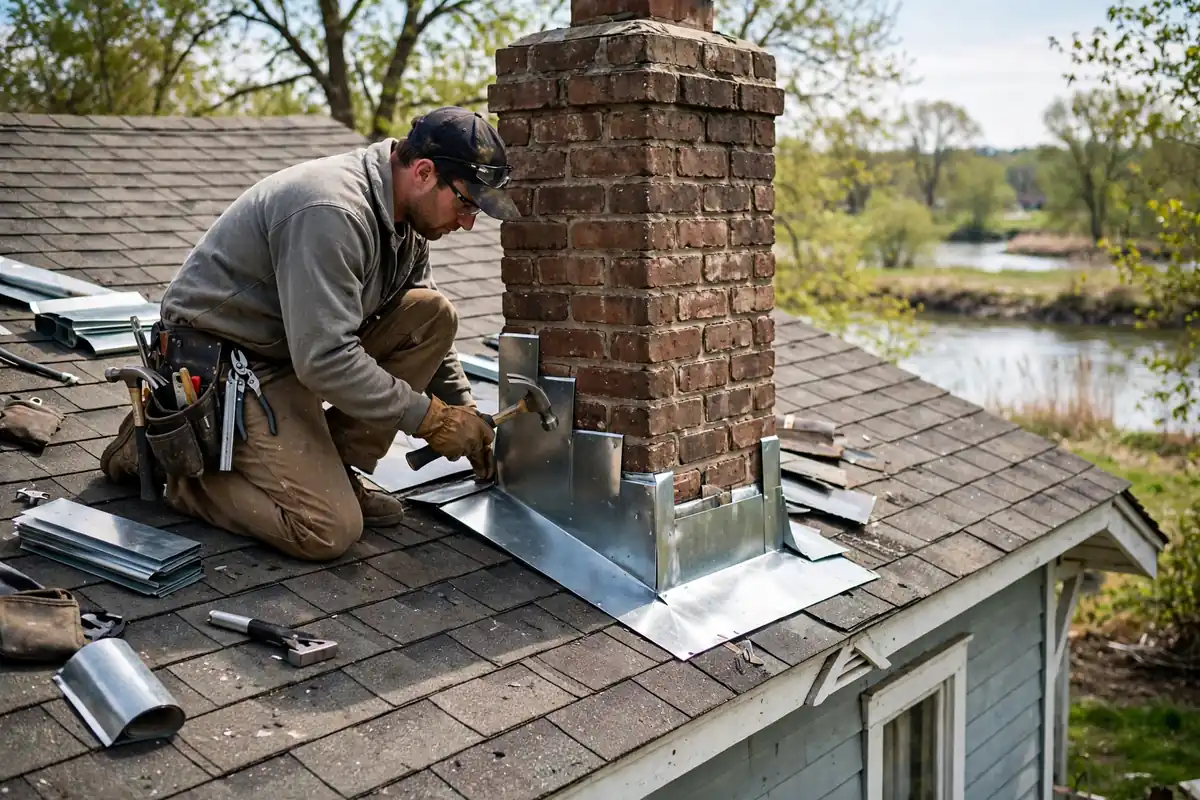
As Sayreville’s local roof leak team, Roof Leak Repair Co’s specialists handle roof flashing repair in South River with the same care we give across Sayreville: a full diagnosis first, a firm written quote, and a repair that is water-tested before we leave.
How South River Homes Change Roof Flashing Repair
South River pairs river-flood history with some of the oldest homes in the area — 1940s–60s houses, many with the insulation levels of their era. That combination makes ice dams the winter signature: heat escaping through thin attic insulation melts roof snow, which refreezes at the eaves and forces water back under the shingles. The February ceiling stain on a north-facing room is the classic South River call.
Flashing is the metalwork that keeps roof-to-wall and roof-to-chimney joints watertight, and it fails long before shingles do. In south river, thin attic insulation makes ice dams the winter signature.
On the day of the visit, we start where South River homes need it most: thin attic insulation makes ice dams the winter signature. That shapes the inspection — we check the highest-probability failure points first, confirm with a water test, and show you photos of what we found before quoting. You approve a firm written price, we do the repair, and we water-test it before we leave. No guesswork, no open-ended hourly billing.
Why South River Roofs Need Roof Flashing Repair
South River's older neighborhoods have some of the area's oldest roofs. Original flashing details, worn valleys, and brittle shingles make for challenging but very fixable leaks.
That is exactly the profile that keeps our roof flashing repair crews busy in South River. Roof Leak Repair Co has repaired roof flashing repair issues across Sayreville for years, and the pattern in South River is consistent: the roofs here fail at the same details, in the same ways, season after season. We fix the failure point — not just the stain it left behind — and every repair is water-tested and backed by a written workmanship warranty.
What Does Roof Flashing Repair Cost in South River (08882)?
Most roof flashing repair jobs in South River fall in the standard leak-repair range — the price depends on how much of the detail has failed and how accessible it is, not on scare tactics. Roof Leak Repair Co explains pricing before any work begins, with a firm written quote and photos of exactly what is being fixed.
The most expensive roof flashing repair is the one delayed. Water that gets a second season in your South River home turns a straightforward detail repair into damaged decking, soaked insulation, and drywall work. Call (888) 974-0663 at the first sign — acting now beats a big repair later. Our call representatives are available 24/7 for emergencies.
What Our Roof Flashing Repair Visit in South River Includes
When Roof Leak Repair Co comes to your South River home for roof flashing repair, here is what happens — no surprises, no upsells, just the repair done right:
- We remove shingles around the failed flashing to expose the full detail
- Old flashing comes out; new step and counter flashing goes in to standard
- Ice-and-water shield is integrated at the junction for a secondary barrier
- Shingles are re-laid and sealed so the repair disappears into the roof
- We water-test the junction and document the work with photos
What Roof Flashing Repair Involves in South River (08882)
Here is exactly what happens when you call about roof flashing repair in South River:
We inspect every flashing joint on the affected slope — step, counter, apron, and wall flashing — plus the shingles woven around them, to map the full scope.
Failed flashing is removed, not patched over: old metal comes out, and any rotted underlayment or deck beneath it is replaced.
New flashing is cut, bent, and woven into the shingle courses correctly — step flashing with each course, counter flashing sealed into sound mortar or siding.
The repair is water-tested before we leave, and you get photos of the finished metalwork with your written warranty.
Finally, we photograph the finished metalwork from multiple angles for your records — proper flashing is largely hidden once shingles are relayed, so the photos prove the work that the eye cannot see afterward.
Materials we use for Roof Flashing Repair
We fabricate flashing on site from 26-gauge galvanized steel, aluminum, or copper depending on exposure — step flashing, counter flashing, apron and head-wall pieces cut and bent to your roof’s exact angles. Underlayment is ice-and-water shield at all flashing joints, and sealant is polyurethane rated for roofing movement. Site-bent metal fits; pre-bent box-store flashing almost never does.
What waiting costs: Failed flashing does not leak a little — it channels water directly into the wall or attic with every rain, storm after storm. The decking and framing around a bad flashing joint rot steadily and silently; by the time the ceiling stains, the wood repair often costs more than the flashing work itself.
Call now or schedule?
Do not wait on flashing: unlike a shingle issue, failed flashing channels water directly into the structure with every rain. If you can see rust, gaps, or old caulk smeared over the joints, the flashing is already past its service life.
What to Watch for in South River
In South River, winter preparation beats winter reaction: adequate attic insulation and ventilation prevent most ice dams before they form. If you see thick icicles on your eaves every January, your attic is telling you something — listen before the ceiling stains.
If a previous repair was just caulk smeared over old flashing, expect it to fail within a season or two — real flashing work weaves new metal into the shingle courses.
amage Leak Repair in SayrevilleRoof Flashing Repair Near You
Roof Flashing Repair in South River FAQs
How long does a flashing repair last in South River?
A properly installed flashing repair — new step and counter flashing with ice-and-water shield — lasts as long as the surrounding roof. It is backed by our written workmanship warranty.
What does flashing repair cost in South River?
It depends on the length and complexity of the junction. We give a firm written quote after inspecting — call (888) 974-0663 today.
Can you just reseal the flashing in South River instead of replacing it?
Resealing is a temporary patch. If the metal is cracked, corroded, or missing proper step flashing beneath the shingles, sealant buys months, not years. We show you photos of what is actually there before recommending anything.
How much does this cost in South River (08882)?
Most single-point repairs run $300 to $1,200. Ice-dam leak repairs that also need ventilation improvements run higher — we quote the leak fix and the prevention work separately so you can decide.
Will the ice dam come back next winter?
Not if the cause is fixed. Removing the ice stops this year’s leak; balancing insulation and ventilation stops next year’s. We explain both so you can choose.
How long does new flashing last?
Properly installed step and counter flashing lasts as long as the roof around it — 20 to 30 years. The failures we replace are almost always original-builder flashing that was never quite right, or decades of caulk patches layered over a detail that needed rebuilding.